Compressor Cooler Cleaning & Cooling Water Management
Cooler Cleaning & Cooling Water Management
We service the tubes (water side) and fins (air side) of intercoolers and aftercoolers. By identifying the type of scale, whether calcium, silica, biological or mud, we select mechanical or chemical cleaning and restore heat exchange efficiency.
When the coolers clog, the whole compressor suffers
When the intercooler and aftercooler foul, heat exchange efficiency falls and discharge temperature rises.
As it worsens, discharge pressure fails to reach the setpoint and the machine drops to unload, and the load/unload cycle becomes abnormally frequent.
Cooler cleaning is normally carried out once a year, with the interval depending on cooling water quality.
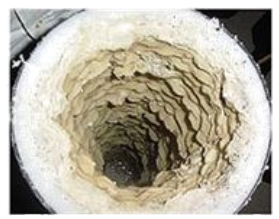
Three problems that arise in the cooling water system
Problem | Cause | Result |
|---|---|---|
Corrosion | Dissolved oxygen and salts, water temperature, flow velocity, deposits, pH | Lower heat exchange efficiency, leaks, reduced material strength, blockage |
Scale | Concentration and precipitation of sparingly soluble salts such as calcium carbonate, iron oxide, silica and calcium phosphate | Lower heat exchange efficiency, higher pump pressure and lower flow, blockage |
Slime | Growth of microorganisms introduced through make-up water and the cooling tower | Heat exchanger blockage, lower cooling tower efficiency, accelerated corrosion, sludge deposits |
Cooling water conditions follow the KS M 0077 standard.
In open recirculating cooling water systems, dissolved oxygen is difficult to remove, so the usual approach is a corrosion inhibitor that forms a protective film on metal surfaces.
Cleaning method by type of scale
The removal method differs completely depending on the type of scale. With the wrong method, the scale is not removed or soon returns.
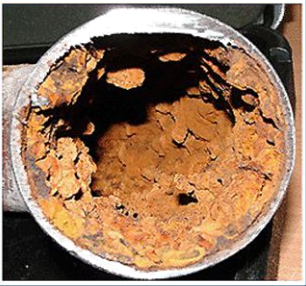
Type | Appearance · characteristics | Cleaning method |
|---|---|---|
Calcium scale | Calcium deposits block the inside of the tubes irregularly (similar in appearance to arterial plaque). Occurs when the cooling water is high in calcium | Chemical cleaning — brushes cannot be used. Diluted cleaning agent is circulated by pump to dissolve and remove the scale, for 4 to 8 hours depending on severity. Neutralization required |
Silica scale | A plastic-resin-like substance covers the tubes and surfaces on the cooling water inlet side | Silica dissolving agent is used, circulated in the same way as for calcium scale. Takes longer when the surface is completely covered. Neutralization required |
Biological scale | A sticky substance fills the inside of the tubes. Even after brushing, it soon returns if spores remain | Biocide is used, circulated by pump |
Mud · silt scale | Mud from the cooling water or rainwater settles and, depending on severity, hardens in place | If not yet hardened, brush cleaning. If hardened, soak in water for an extended period to swell the deposit, then brush clean |
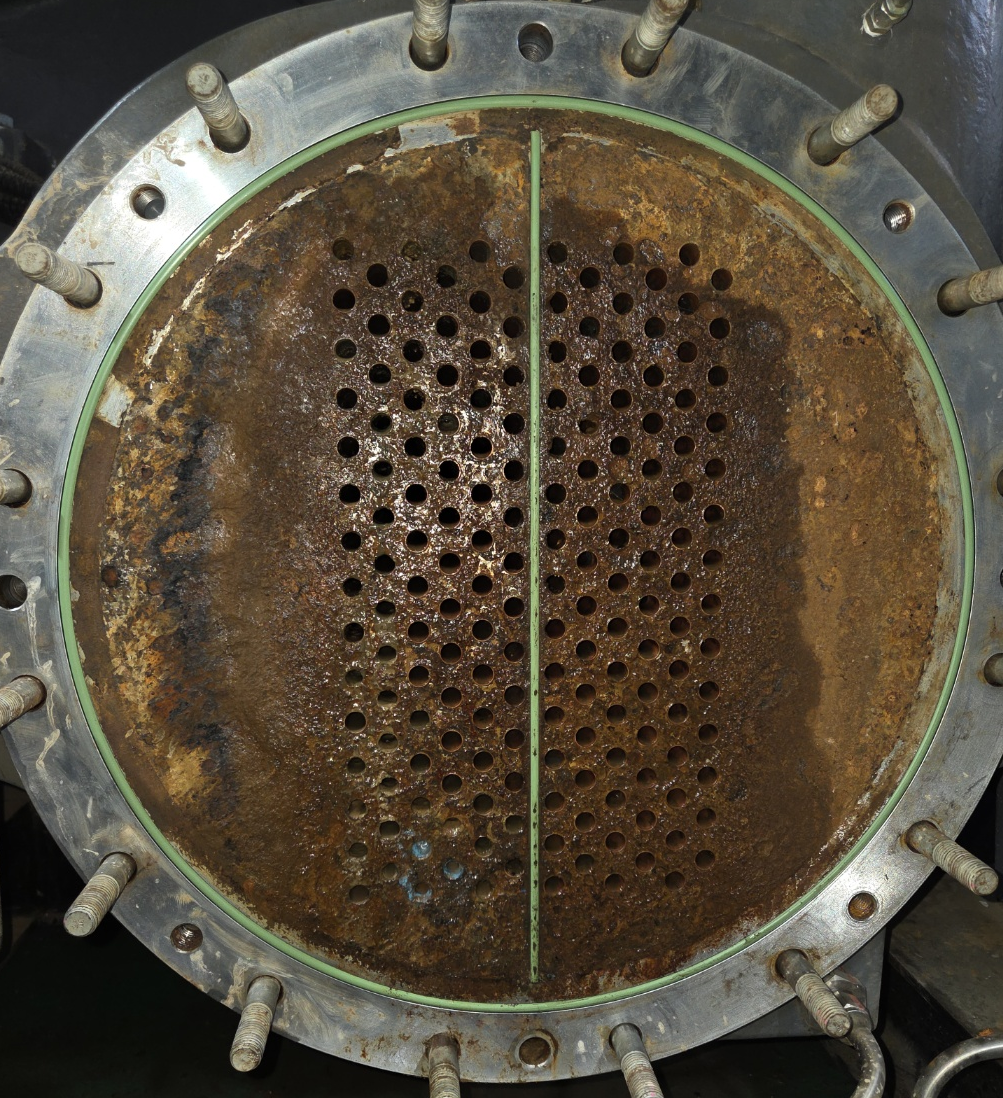
Important — once a tube is completely blocked, the chemical cannot flow and chemical cleaning itself becomes impossible; in the end the cooler has to be replaced.
That is why action must be taken before blockage occurs. Where there is no water quality history, as in a newly built plant, the coolers should be inspected periodically to identify the type of scale first.
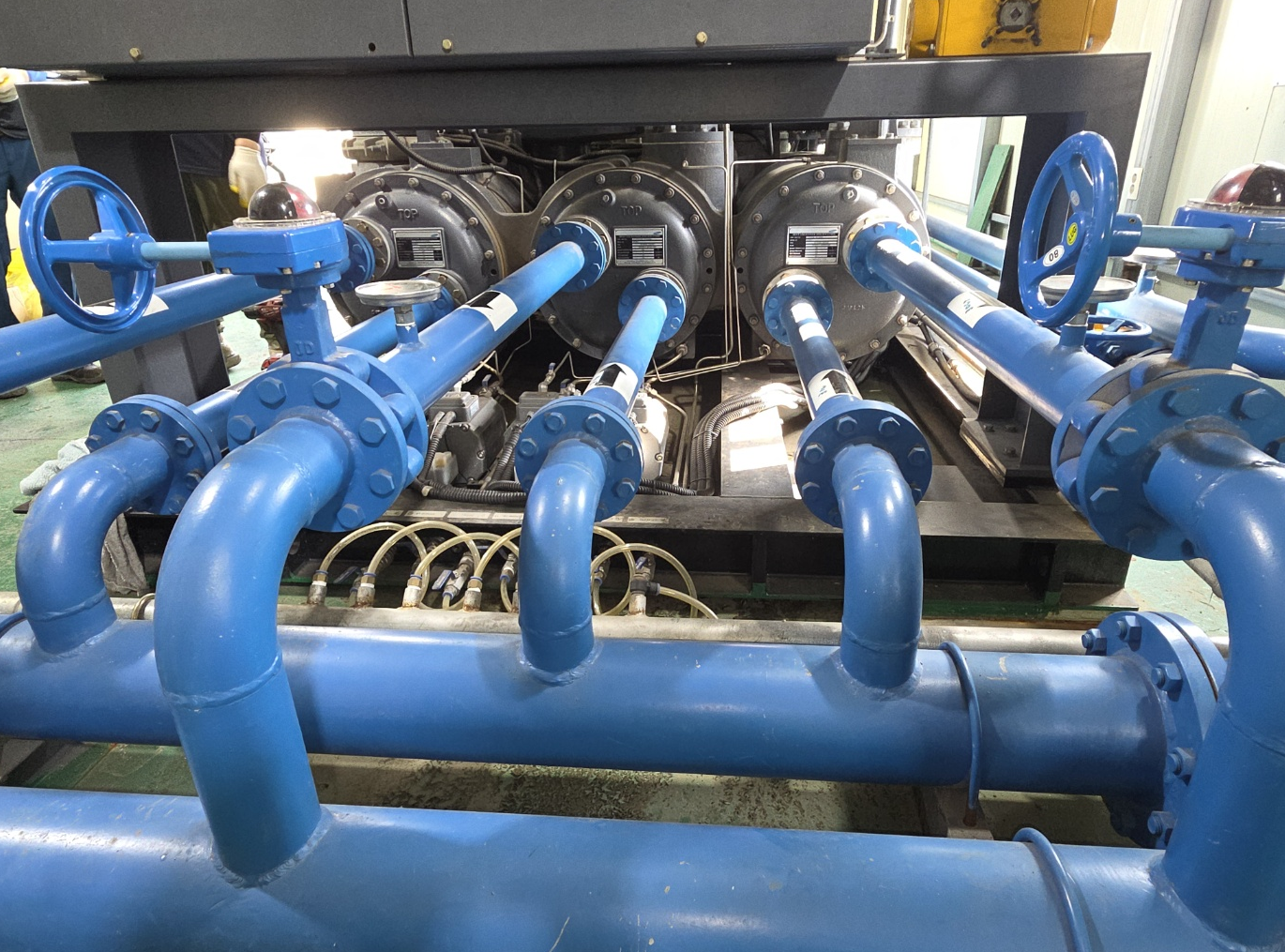
Cooler disassembly and mechanical cleaning
Cooler cleaning usually brings to mind only the cooling water tubes, but the fins that the air passes through also determine discharge temperature.
As a rule, we recommend one fin cleaning for every two tube cleanings.
When contaminants from the intake air have built up on the fins — heat transfer efficiency falls and discharge temperature rises.
Depending on condition, we apply high-pressure spraying with neutral detergent, or a tar-removing agent with a high-pressure washer
When corrosion products from inside the cooler lodge in the dense fins — efficiency drops sharply, temperature rises substantially, and control abnormalities such as frequent load/unload cycling appear
Cleaning inquiries
Tell us the cooler type, cooling water quality (or a recent water analysis) and how much the discharge temperature has risen, and we will advise whether mechanical or chemical cleaning is appropriate and how long it is expected to take.