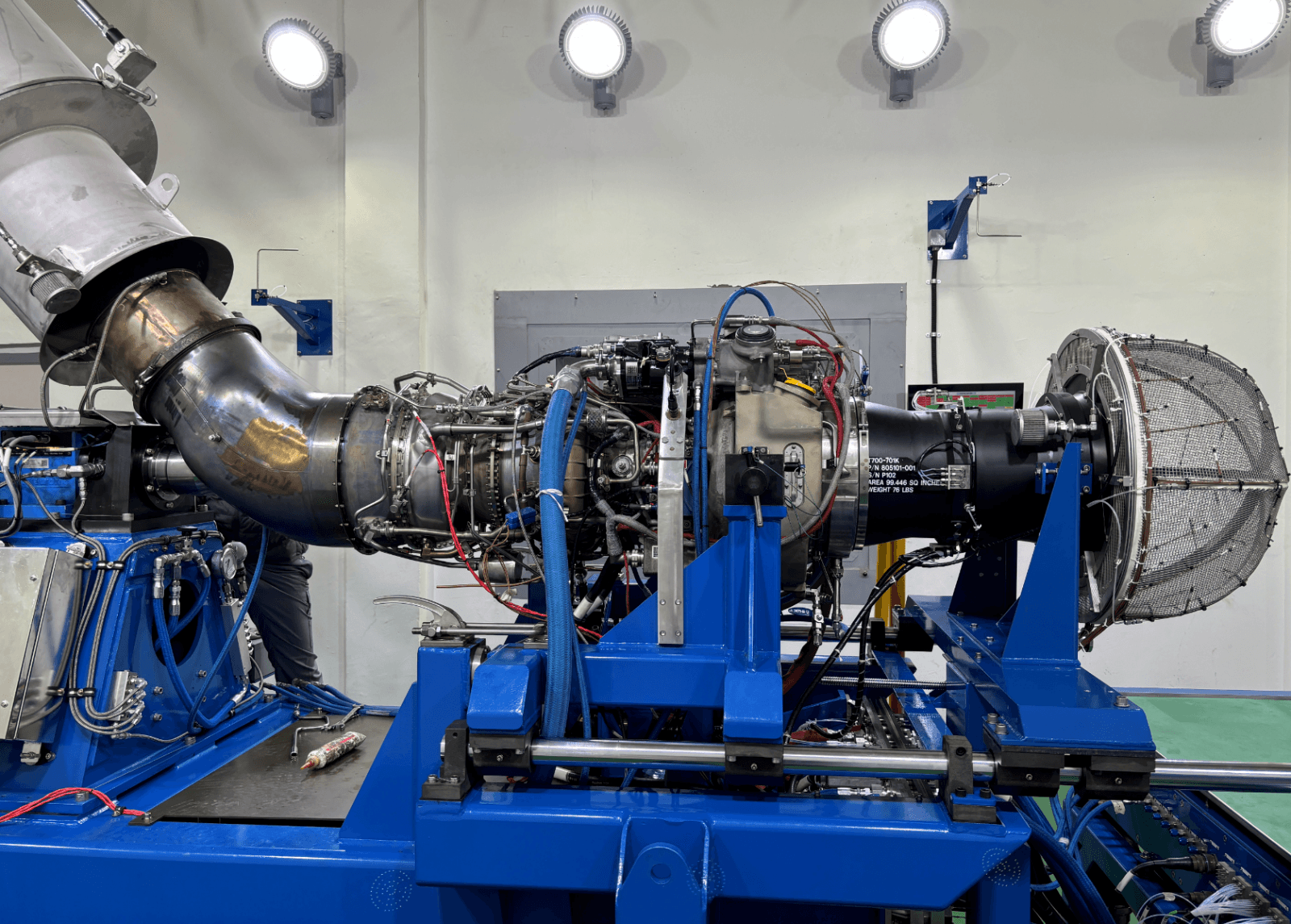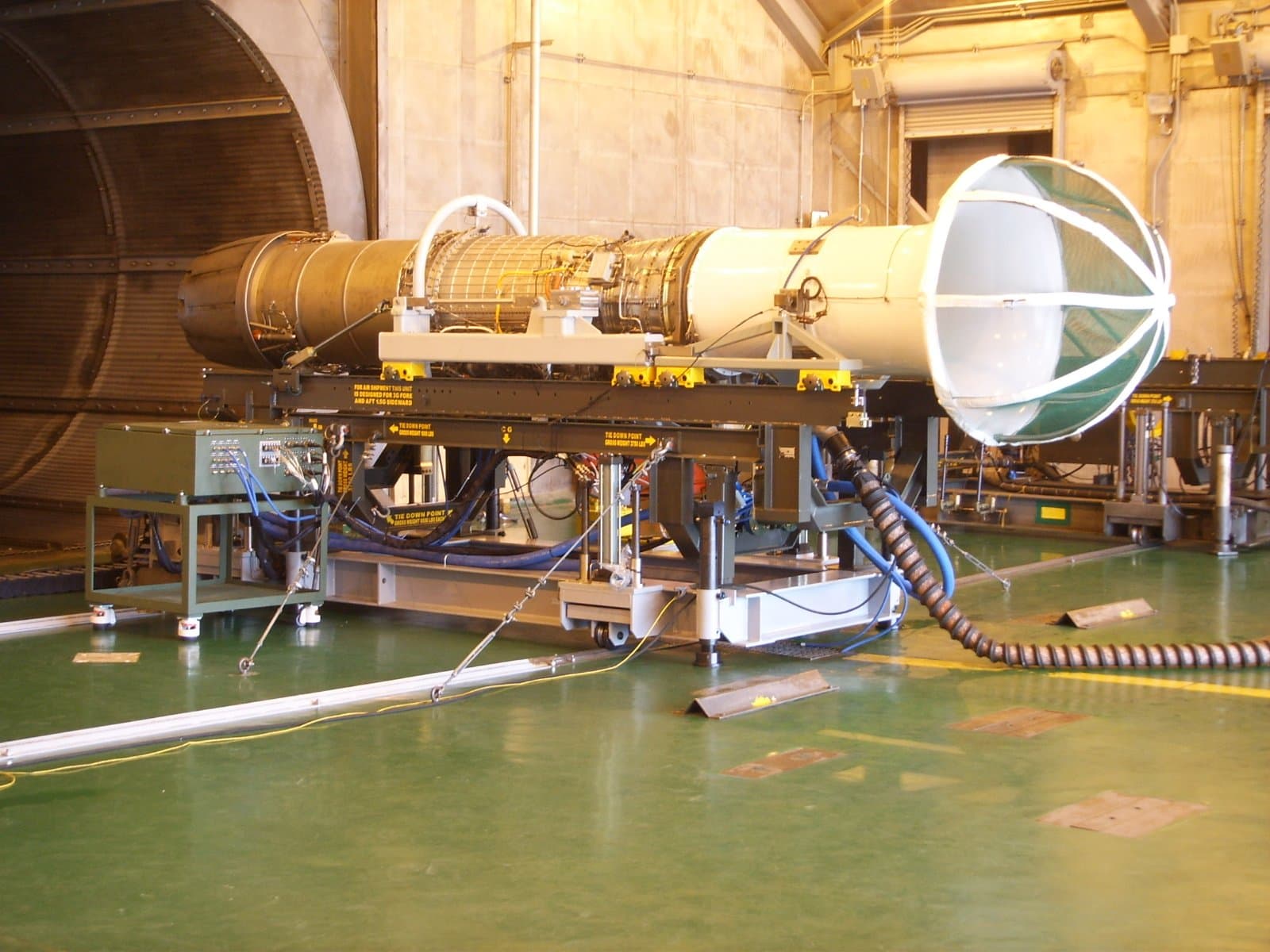
Turboprop Engine Test Facility
Turboprop Engine Test Cell (PT6A-62 Test Cell Performance Upgrade & Maintenance, C-130H/CN-235 Integrated Engine Test Facility)
A test facility upgrade project in which GENEQ covered the entire process for an aging engine test cell, from partial removal of the existing systems to new system installation, troubleshooting, commissioning and operator training, restoring stable operation and improving performance. GENEQ also designed, built and installed an integrated test facility that can run up both the T56 and CT7 engines of the Air Force's CN-235 and C-130H transport aircraft in a single cell, covering performance upgrades and maintenance as well.
Contract maintenance and upgrade projects
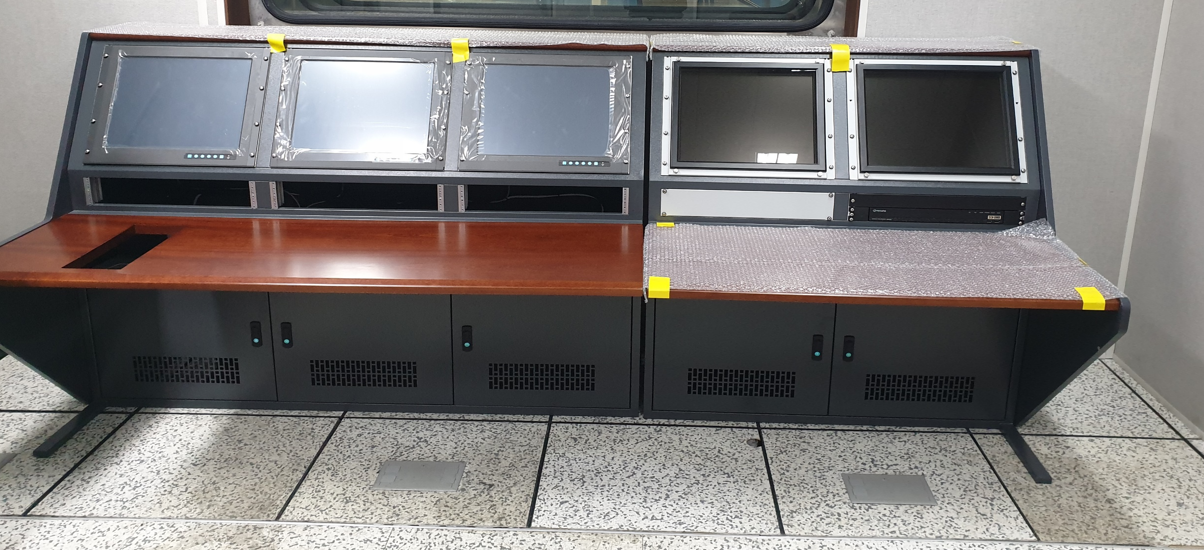
For engine test cells, GENEQ provides the entire process, from removal of existing equipment to installation of new systems, commissioning, troubleshooting and operator training. Rather than simply swapping hardware, we diagnose the existing system and reconfigure it for the site, raising the performance and operational reliability of aging test cells through our upgrade and contract maintenance projects.
Removal of existing equipment
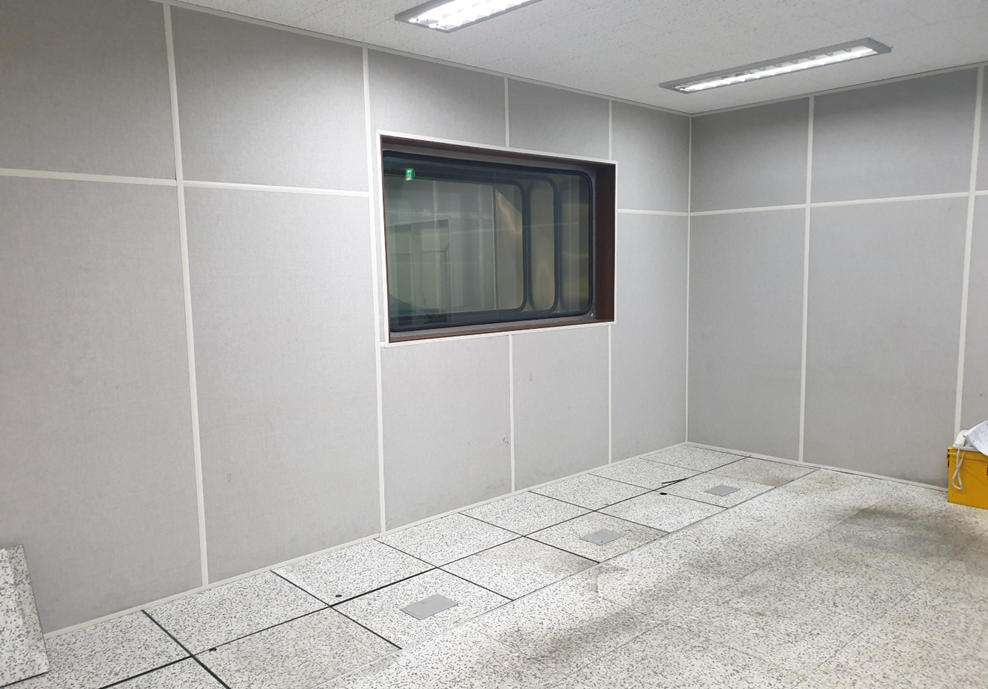
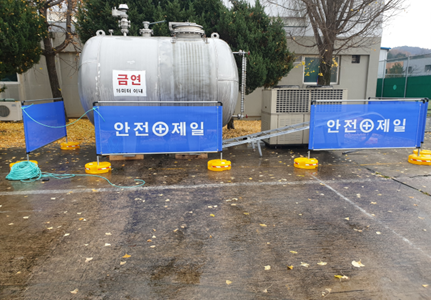
A test facility upgrade begins not with bringing in new equipment, but with removing the existing system safely and systematically. Each subsystem is checked and then dismantled and removed in sequence, and problems found on site are dealt with as they arise. In one case, while relocating the DAS rack to a new position we found that the existing floor could not carry the load, and immediately added floor reinforcement to support the rack. We then dismantled the engine stand servo motor and flow meters, removed the existing fuel tank, cooling water tank and chiller, and demolished the old fuel dike, completing the removal of the old facility and site preparation step by step.
New foundations and construction work
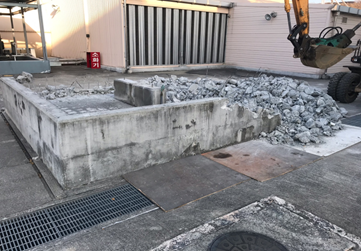
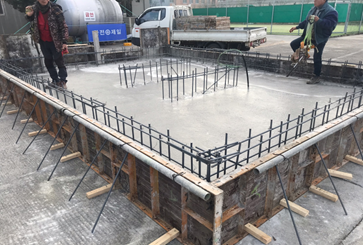
To install and operate the new fuel tank safely, a new dike base is built where the old fuel dike was removed. After placing the rebar and formwork, concrete is poured to create a new foundation structure that supports the fuel tank securely.
At the same time, a separate base frame is installed to resolve the rack load-bearing problem identified during removal and relocation. The foundation is reinforced to carry the equipment load safely, preventing structural problems before they can occur.
Beyond simply replacing equipment, checking and reinforcing the foundations and supporting structures so that the new equipment can be installed securely and operated continuously is an essential part of a performance upgrade.
Delivery of new equipment, piping and wiring
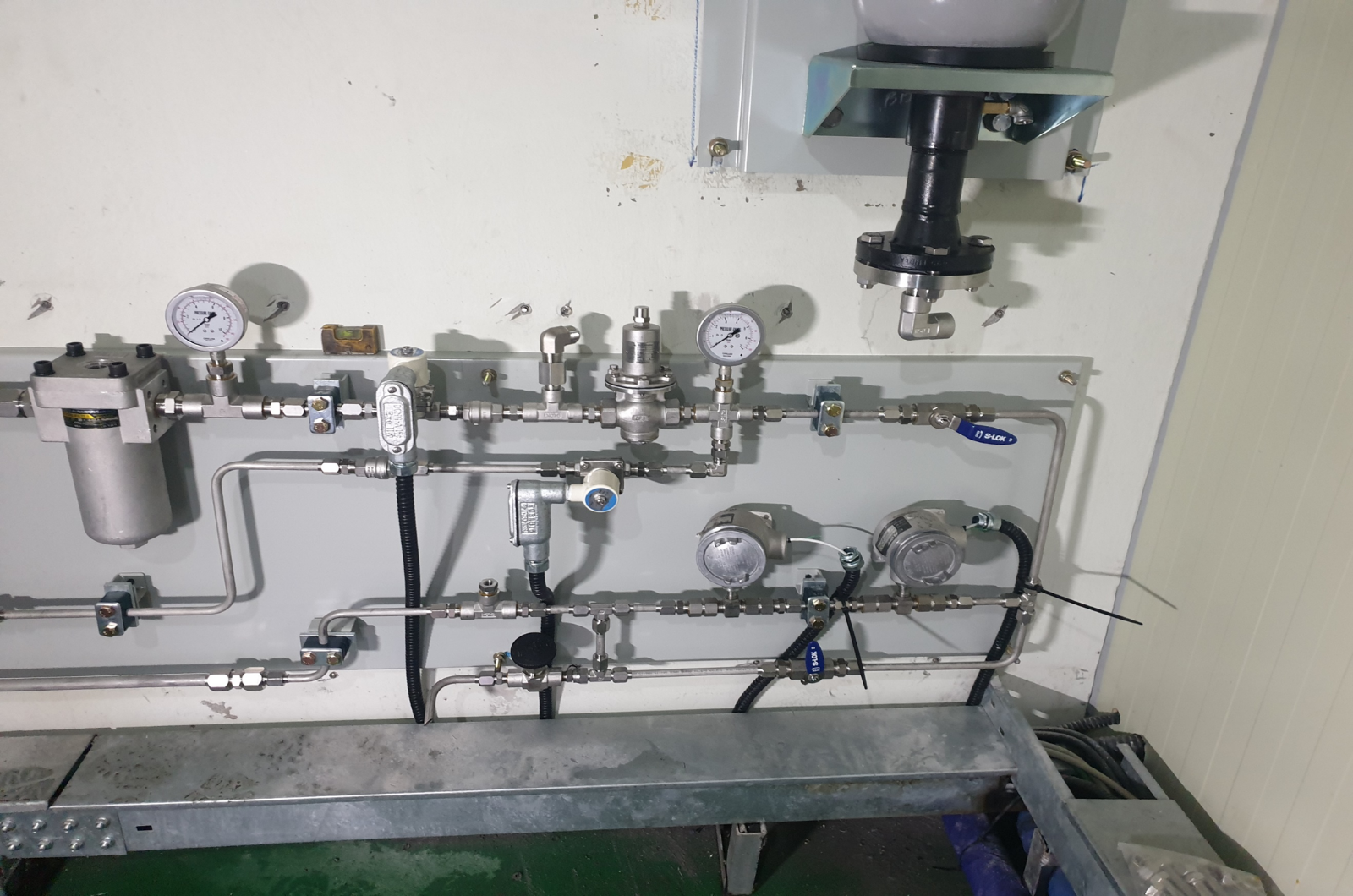
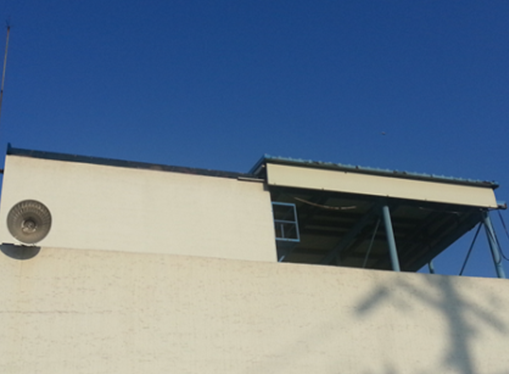
Once the foundation work is complete, the new fuel tank and fuel package are brought in and piped up, and roof structures are erected over the fuel tank and chiller for protection from rain. The cooling method is chosen to suit the customer's requirements, and the fuel dike receives primer and top coats for durability. On the control side, the DAS rack converter, signal converter, MCP and PLC are newly installed and wired, the console desk and harness cables are re-laid, and the CCTV, intercom and PT box can be reconfigured as well.
Pre-commissioning facility checks (assembly, verification, calibration, performance stabilization)
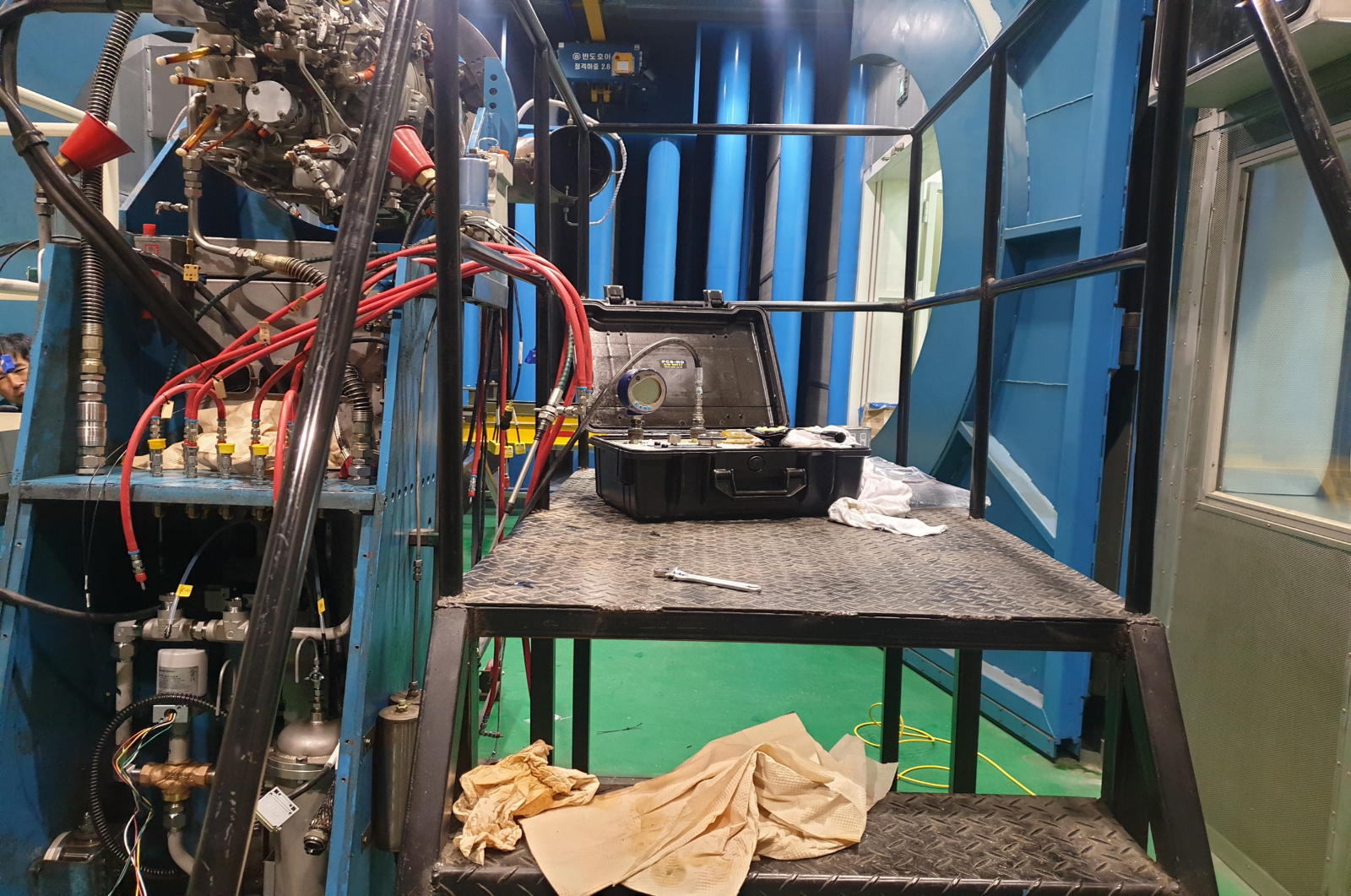
Assembling a facility and verifying that it works properly under real operating conditions are two different things. Before commissioning, GENEQ calibrates each temperature and pressure measurement channel individually and checks its function. During this process we found that the scavenge oil pressure sensor showed a recurring offset error. When a sensor fault occurs, it is corrected through the manufacturer's or supplier's service and normal operation is confirmed again.
Likewise, when an abnormality is found, such as the TCV (temperature control valve) failing to return from 100% to 0% opening, the cause is analyzed and corrected to secure normal operation.
In this way, GENEQ does not stop at completing installation and assembly. Before commissioning, we check and verify the instrumentation and control equipment for any abnormality. Pre-verification that misses no early warning sign is the foundation of stable engine run-ups and facility operation.
Operator training and manuals
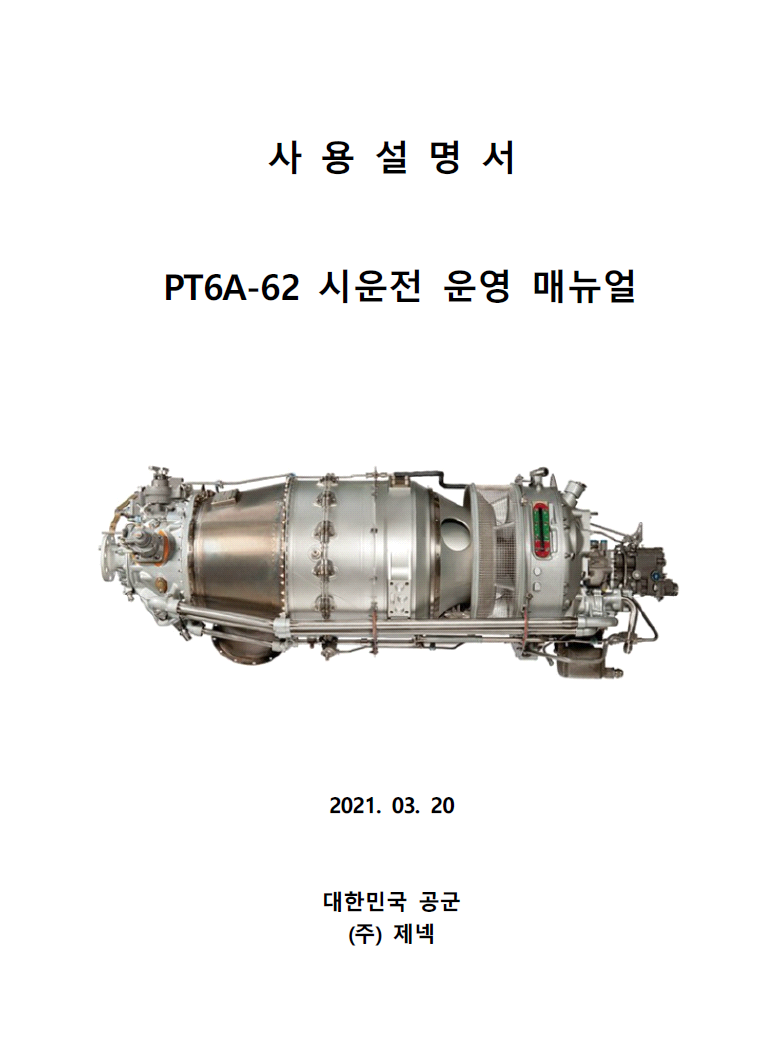
As important as completing the equipment is the proficiency of the operators who will actually use it. GENEQ directly trains operators across the mechanical, electrical and software systems, covering power-up procedures, running the operating program, run-up preparation and run-up procedures.
Integrated test facility (CN-235 and C-130H aircraft, T56 and CT7 engines)
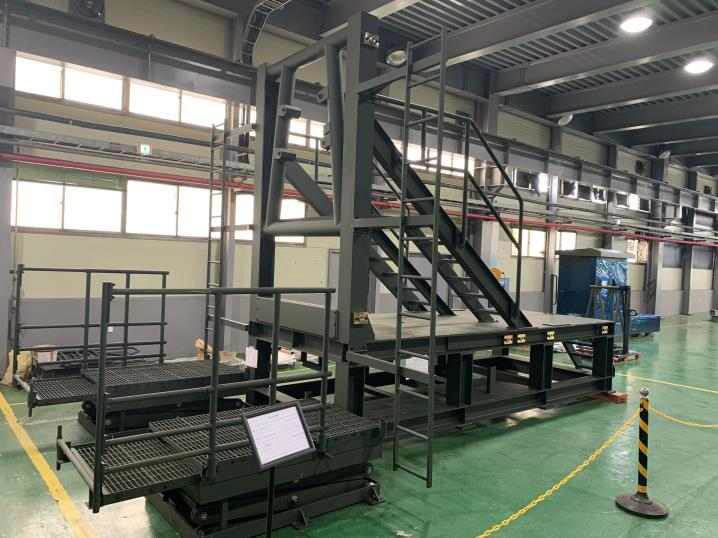
The T56 and CT7 both power Air Force transport aircraft, but they are different engine types with different parameters and procedures to be checked during run-up. Separate run-up equipment for each type is the norm, but unit operating conditions sometimes require both types to be run up in a single facility.
To meet this need, GENEQ can design, build and install an integrated test facility that runs up two engines in one cell. The core of the project is making one facility and one control system handle either engine type.
Safety and operating framework
A test facility is only complete when it is safe and reliable in the actual operating environment. GENEQ applies the hazards that can arise while operating run-up equipment, including high voltage, heavy loads, oil and chemicals, and fuel, throughout the manuals, so that operating and maintenance personnel can make immediate decisions in any situation. The framework covers response procedures not only for normal conditions but also for emergencies such as emergency stops, and can be used directly in the field.
Building the integrated test facility
Building a test facility is not simply delivering a piece of equipment. Through the integrated T56/CT7 engine test facility project for the CN-235 and C-130H, GENEQ has demonstrated both the design capability to resolve differing requirements in a single system and the delivery capability to complete a facility to the point where it can be operated safely. We will continue to respond to customer needs with custom-built test facilities optimized for each engine type and operating environment.