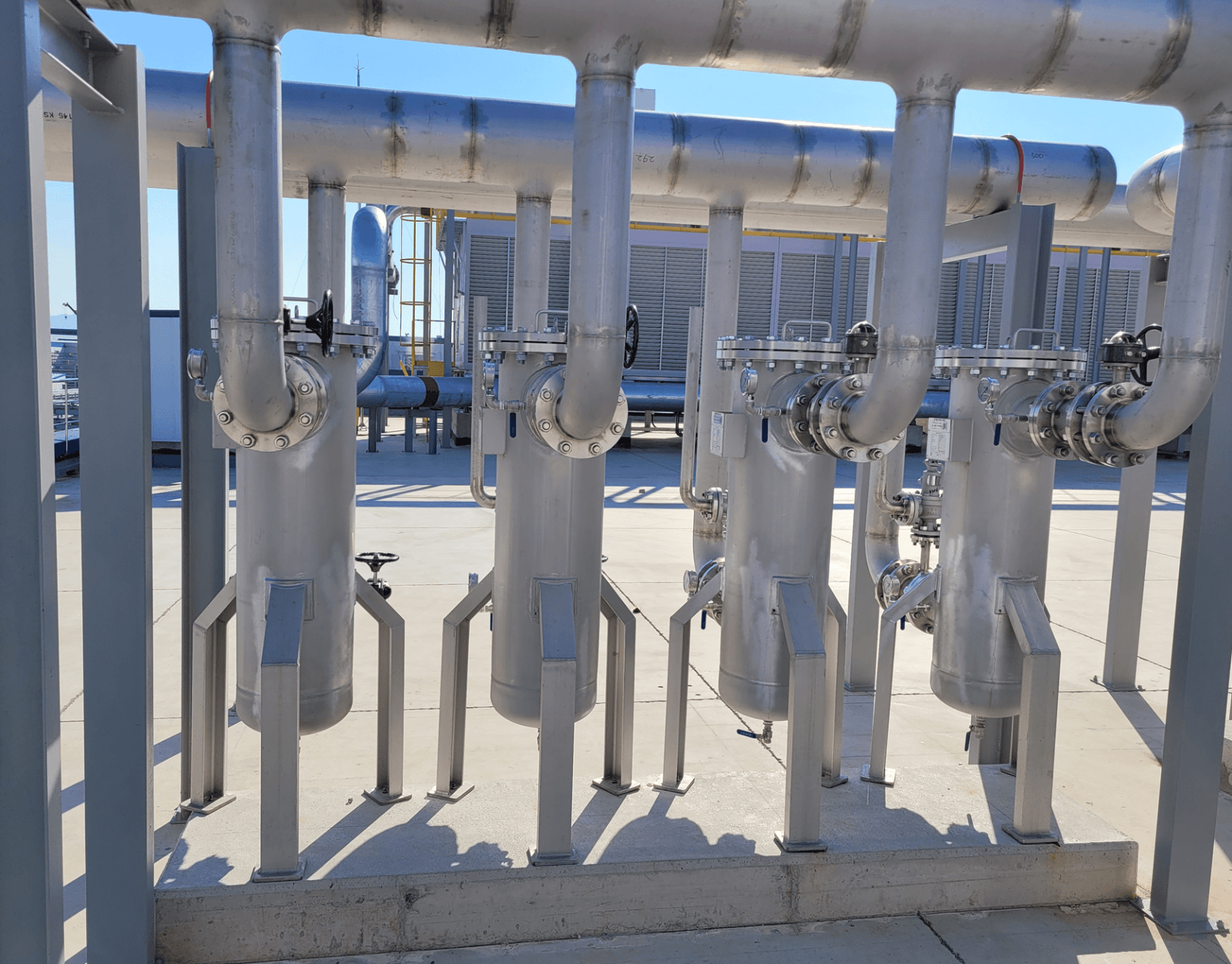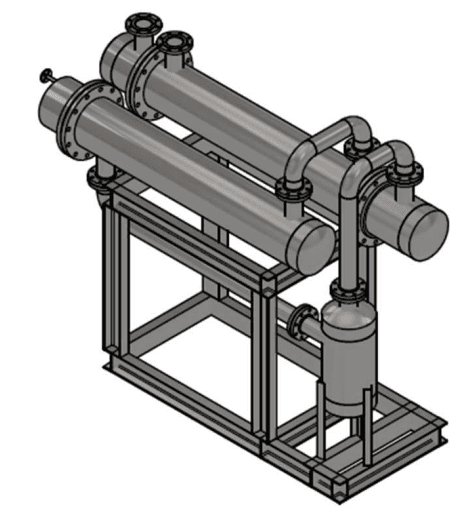
Combination System (Indirect Refrigerated + Desiccant)
Combination System — Indirect Cooling + Desiccant
A combined system that dehumidifies first with an indirect refrigerated dryer and finishes with a desiccant dryer. Lowering the inlet temperature and moisture load on the desiccant dryer reduces regeneration heater power and extends desiccant life.
Combine the two and operating costs come down
Most of a desiccant dryer's energy goes into regeneration (the heater). Yet a desiccant has less work to do the colder and drier its inlet air is.
So placing a refrigerated (indirect) dryer upstream to take out moisture and heat first reduces the load on the desiccant dryer behind it, and regeneration power falls with it.
A combination system designs, builds and commissions these two units as a single package.
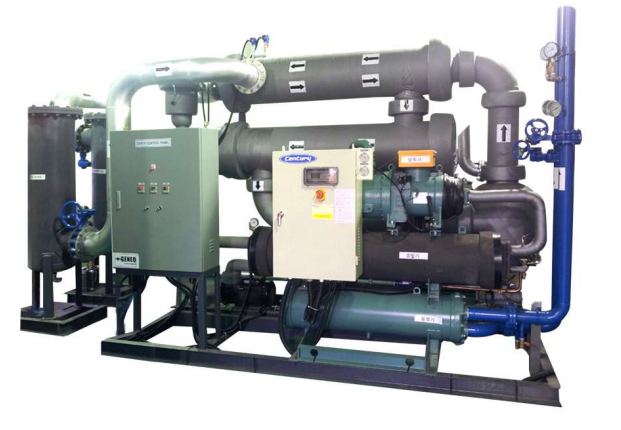
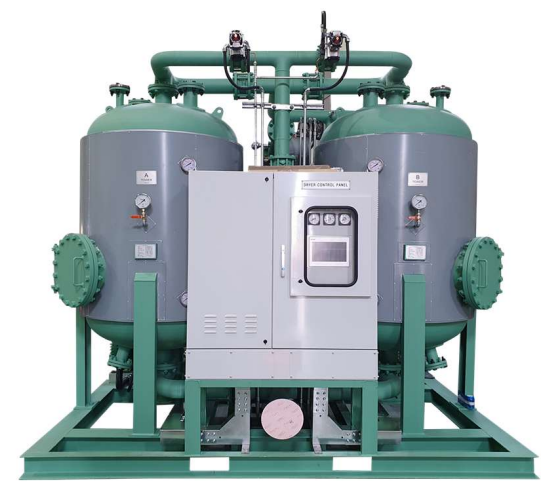
Configuration and benefits
Stage | Equipment | Role |
|---|---|---|
Primary | Indirect refrigerated dryer (SH) | Cools the compressed air through indirect heat exchange with chilled water and condenses out moisture, to a pressure dew point of around 8–10 °C |
Secondary | Desiccant dryer | Removes the remaining moisture with a desiccant to reach a sub-zero dew point (around -40 °C) |
Expected benefits
Lower regeneration heater power — the amount of moisture the desiccant dryer has to handle is itself reduced
Longer desiccant life — a lighter load slows degradation
Stable dew point — the primary stage absorbs the effect of changes in inlet conditions (season, load)
Single point of contact — one company designs and builds both the refrigerated and desiccant dryers, so there are no interface problems
At sites without chilled water infrastructure, a direct-expansion dryer (SR) or a chilled water air cooler (SP) can be used upstream in place of the indirect dryer.
We propose the optimal combination for your site conditions.
Why GENEQ
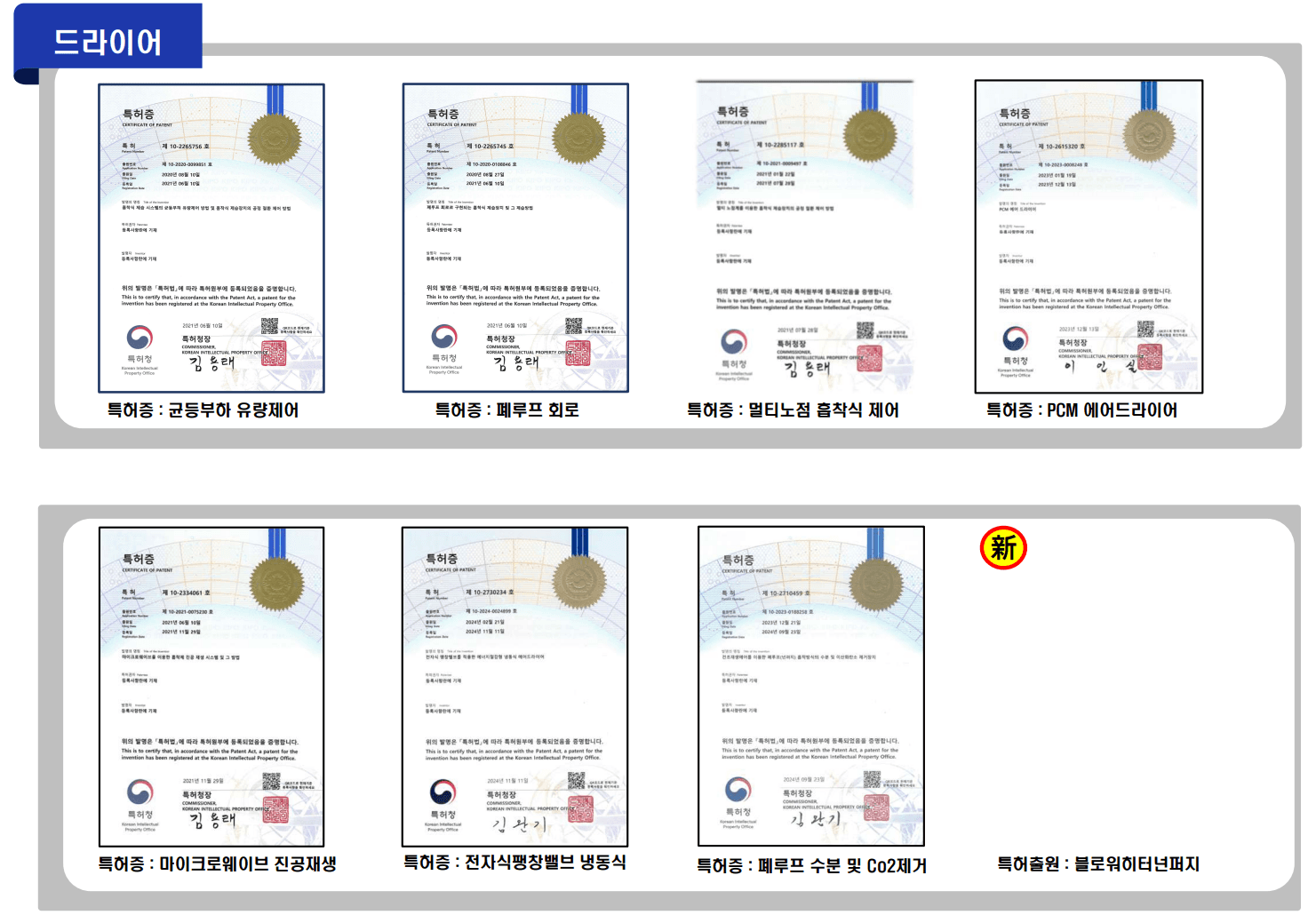
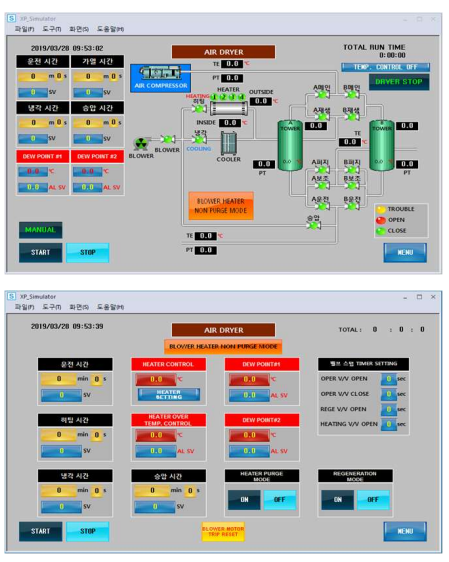
A combination configuration can only be delivered as one system by a company that designs and builds both refrigerated and desiccant dryers in-house.
GENEQ manufactures both types with its own design technology, so capacity matching between the stages and control integration are handled consistently.
We have delivered combination systems to large-capacity sites such as shipyard paint shops.
Configuration inquiries
Tell us the flow rate to be treated, required dew point, chilled water availability and installation space, and we will review the stage combination and the expected savings together.