
Air Compressor Load Sharing System (LSS)
Air Compressor Load Sharing System (LSS)
An energy-saving system that controls multiple air compressors as one through an HMI and PLC, optimizing the load ratio and running order of each compressor. It reduces compressed air venting and unnecessary unloaded running, supporting a stable pressure supply.
Integrated air compressor control system
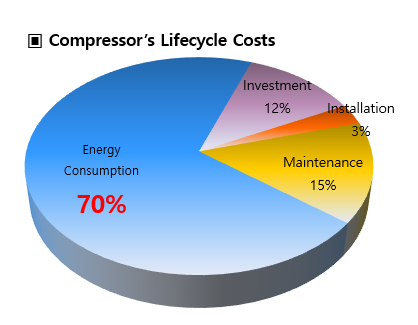
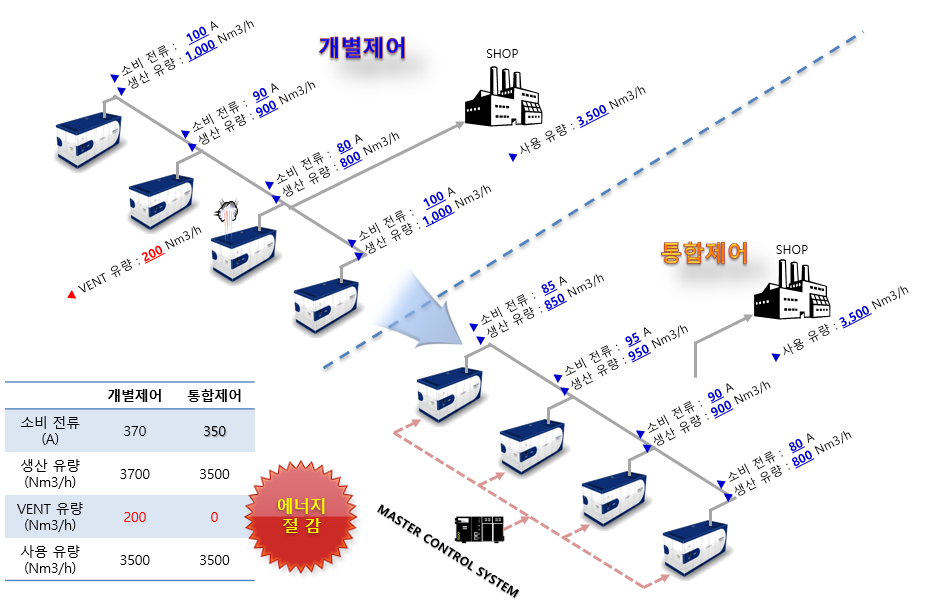
When air compressors are run independently, changes in air demand can cause load imbalance between the units. Some compressors end up running at low load or unloaded, or compressed air that has already been produced is vented through the BOV, wasting energy.
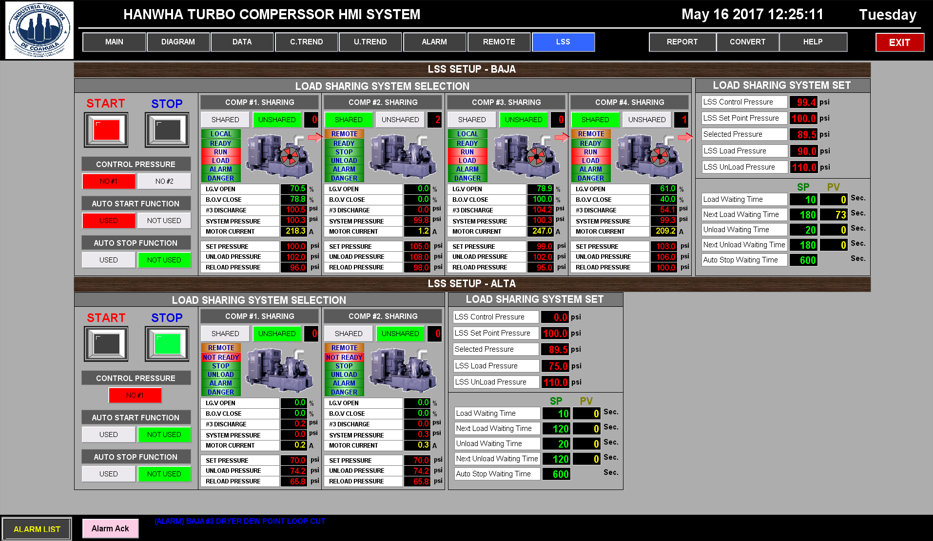
GENEQ's air compressor load sharing system (LSS) controls multiple compressors as a single system, adjusting the load ratio and running order of each unit. It automatically controls loading, unloading, starting and stopping according to plant air demand and main header pressure, supporting a stable compressed air supply and energy savings.
Key functions
Compressor load sharing control
Monitors the operating status of multiple air compressors in real time and distributes load between them. It reduces load concentration on any one compressor and minimizes compressed air venting.
Automatic start/stop control
Automatically starts the compressors needed according to air demand and the set pressure. Unloaded compressors running beyond what is needed can be stopped automatically under the configured conditions.
Target pressure control
Compares main header pressure with the target pressure and automatically adjusts the compressor operating setpoints. Control pressure, start delay, restart inhibit time, unload delay and auto-stop time can all be set to suit site conditions.
Running order management
The compressor running order can be set automatically or manually. In automatic mode, rotation control can be applied to cycle the running order based on the accumulated running hours of each compressor.
Redundant pressure sensor control
If a pressure sensor or PLC input channel fails, the system can be configured to compare the input values and switch automatically to the healthy sensor.
System configuration
The load sharing system is configured as follows, according to the customer's site conditions and compressor lineup.
Control room HMI system
Master PLC control panel
Main pressure sensor and field instruments
Interface to the compressors' local controllers
Industrial network and communication modules
Compressor and dryer operating status monitoring
Operating data, alarm and trend screens
After reviewing the manufacturer, controller and communication method of the existing compressors, we determine the control scope and system configuration that suit the site.
Benefits
Corrects load imbalance between compressors
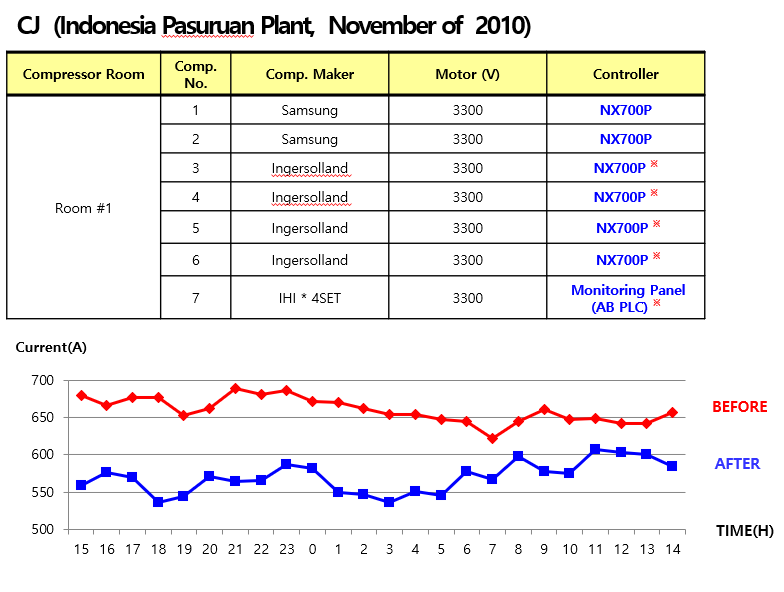
Minimizes compressed air venting
Reduces unnecessary unloaded running
Stabilizes plant compressed air supply pressure
Distributes running hours across compressors
HMI-based integrated monitoring and remote operation
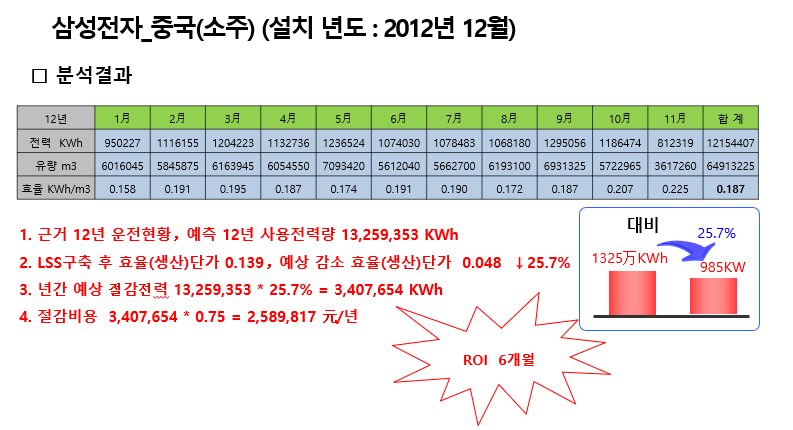
Saves energy in compressed air production
Actual savings depend on the number of compressors, operating load, pressure settings, air usage pattern and the existing control method,
so operating data must be analyzed in advance.
Related patents
Compressor load sharing system: Patent No. 10-1344036
Compressor energy loss calculation method: Patent No. 10-1414763
Applications
Suitable for steel, automotive, electronics, semiconductor, shipbuilding and general manufacturing plants that run multiple air compressors in parallel.
GENEQ analyzes site pressure, flow, current draw, the number of compressors in operation and the controller configuration, then designs and builds a load sharing system that fits the site.